Neighbours, before anything else
In every crisis, residents helped residents before any system did.
Navnirman · Resident owners of Prestige Falcon City
A residents' manifesto for the PFCAOA Board — safe water every day, open books every quarter, and no big decision about our shared spaces without your consent.
Eight commitments.
Written down, so you can hold us to them.
Before anything else
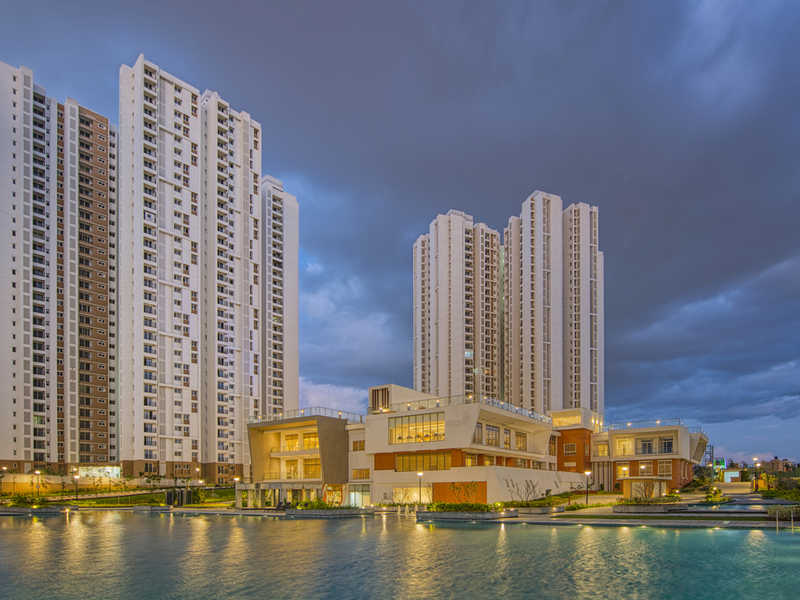
Prestige Falcon City is one of the finest addresses in South Bengaluru — around 2,500 homes across five buildings on thirty acres, with a metro station at our gate and a city's worth of amenities inside our walls. But what makes this place special was never the concrete.
In every crisis, residents helped residents before any system did.
Festivals, sports, clubs and volunteers, run by residents for residents.
People who chose to fix this place rather than leave it.
Metro at the doorstep, everything else inside the gate.
It is the neighbours who ran to help when families had no water. The residents who drove each other to hospital at two in the morning. The volunteers who organise our festivals, coach our children, walk the dogs, run the sports leagues and answer the phone when someone needs help. The families who chose to stay and solve problems rather than sell and leave.
Whatever we have been through, this community held. That is the achievement. That is what we are standing to protect.
What this is
Every commitment in this document has a date, a number or a published document attached to it. That is deliberate. A promise you cannot check is not a promise.
One standard format, on a fixed day of the month, whether or not anybody asks.
What the name carries
Not tearing anything down. Rebuilding how decisions get made — so that the next crisis is met by a system instead of a WhatsApp group.
Fix the way the association works, not just the thing that broke this week.
Books, water tests and contracts published on a date, in one standard format.
Nothing big about our shared spaces without notice and a residents' vote.
A scorecard at regular intervals, and a bye-law that lets you remove us.
The record
These are not complaints. They are documented facts, and every one of them is fixable. No individual is named in this document, and none needs to be — these are failures of system, not of character.
A township of 2,500 homes needs a written water plan, not an emergency appeal.
Illness must be disclosed in 24 hours, and test results must be published every month.
Big decisions about common areas belong to the general body, not to a notice.
Open books, every quarter, in one standard format.
The commitments
Built on powers the registered bye-laws already give the Board, so every commitment here is something it can actually do. Where one says at regular intervals, that is deliberate: the policy and standard operating procedure behind it — who does what, to which standard, and on which date — will be drafted, published and put to residents. We will commit to dates when we can commit to keeping them.
Independent testing at regular intervals, results published good or bad. A costed Cauvery plan put to your vote.
A finance dashboard every quarter. Every contract in a public register. Open tenders above ₹25 lakh.
Nothing above ₹50 lakh, no new structure on common land, no special levy without 21 days' notice and a residents' vote.
Every faith and every view respected. From now on, residents decide together.
A forensic audit of three years of accounts. Every third-party rate re-negotiated. Payment plans before lawyers.
A 24x7 emergency helpline with an ambulance on standby, a senior citizens' care programme, illness disclosed within 24 hours.
Sensor lighting, EV-ready basements, a plastic-free and water-wise campus, a mini pet park.
Faster gates, reliable lifts, quiet hours, a café, a humane plan for community dogs, and a grievance desk with deadlines.
Water, in detail
The one thing here that reaches every flat every day, and the one where a failure gets measured in hospital visits rather than complaints. It deserves more than a line in a plan.
Cauvery, borewells and tankers each carry a different risk, and we rarely know which one we are drinking. The share drawn from each source published, with what each costs. No tanker discharges into a sump without a current lab certificate. A costed Cauvery Stage V connection put to a residents’ vote, set against what tankers cost us.
A plant is only as good as its last service. Its operating log published: filter media age and replacement, backwash frequency, dosing records, and the outlet reading against the inlet. Third-party inspection of the plant itself, not only the water it produces, published in full. Media, membranes and UV lamps replaced on the manufacturer’s schedule, not when something tastes wrong.
An under-performing STP is not just an odour complaint. Its output returns to our own landscaping and our own flush lines. Outlet results published against the KSPCB consent limits, running hours against design capacity, and how much treated water is genuinely reused rather than discharged. Sludge handling documented. Any bypass told to residents, not discovered at an AGM.
Testing the inlet tells you what arrived, not what you drank. NABL-accredited testing at three points — source, post-treatment, and a rotating sample of taps across all five buildings, so no tower is assumed to be the same as its neighbour. Results published in one format, good or bad, and kept online so a trend is visible rather than a single reading.
Borewells are a shared and finite asset. Yield and static water level published for every one of them, so depletion appears as a line on a chart instead of a surprise. Ground water tested for what matters here — hardness, TDS, nitrates and total coliform — not the cheapest available panel. Recharge pits and rainwater harvesting structures inspected, with the report published.
Every borewell, sump, overhead tank and pump mapped, with 24 months of tanker spend alongside. Where the losses are, what is leaking, and what it costs. Done thoroughly, so that every number published after it means something.
In March 2024 the supply was rationed to two windows a day and families were asked to help fund tankers. Summer is not an emergency; it arrives every year. A written summer plan — projected demand against storage and borewell yield, the tanker rate agreed before the season rather than in the middle of it, and the rationing trigger published in advance, so nobody learns the rules on the day.
Pumps, valves, pipework and tanks were installed together and reach the end of their first service life together. A condition survey of the water assets with remaining life and replacement cost against each, so the reserve is planned rather than discovered — and a failed main is a scheduled cost, not a special levy.
Accountability
Every commitment is specific enough to check, and published in this manifesto.
Not wishes — the powers the association already has and has not been using.
The bye-laws let residents remove any Board member by simple majority. We will publish a scorecard at regular intervals so you always know whether we deserve to stay.
Who we are
Not a panel assembled for an election. Neighbours who drink the same water, pay the same maintenance and will still be here on the ninth of October.
Your vote
The Prestige Falcon City Apartment Owners Association election is on 8 October 2026.
An owner with outstanding maintenance dues is not eligible to vote. Settle them before the AGM so your vote counts.
Come in person if you can. The decisions taken there bind all of us for the year ahead.
If you cannot attend, hand your proxy to a resident owner you trust. A resident may hold at most two proxies.
If you are a tenant, you are a neighbour too — join us from the website, and we will keep you and your owner on the same update list.
Questions, corrections, or something we have missed — we would rather hear it.
Issued by Navnirman, a voluntary group of resident owners of Prestige Falcon City.
This is an independent residents' initiative and is not an official communication
of PFCAOA or of Prestige Group. No individual, past or present office bearer,
employee or vendor is named in this document.
Last updated: [DD Month YYYY]